


Designing Democracy: Posters and the Political Transformation of Europe 1989-1991
20 November, 2009. As part of the Children of the Revolution project, marking the 20th Anniversary of 1989, over 250 political posters relating to democratic change in Europe made available online at the V&A Museum website. In November the online collection will be completed by the curatorial descriptions. On 20th November the V&A museum will gather curators and other experts in the field to discuss the project, its methodology, findings, contemporary context and significance; the material recorded will be used to start preparing the collection catalogue, to be published by the V&A in 2010.
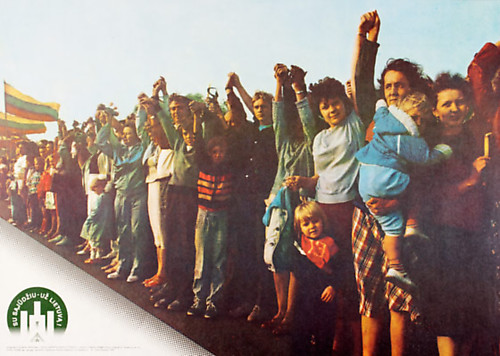
Lithuanian posters (almost 30 in the collection) have been described by Juozas Galkus, one of the most authoritative poster experts in Lithuania, former Professor at the Graphic Department, Vilnius Academy of Art. The descriptions include valuable information on the political circumstances, the purpose of the poster and its historical context; visual language – the form of the poster and how it communicates its message; reception, memory and historical life of the publication as well as basic facts about the artists.
David Crowley, Royal College of Art: "Much of the V&A's collection presented here was gathered by curator Margaret Timmers in Central and Eastern Europe in the aftermath of the fall of the Berlin Wall and the Velvet Revolution in Czechoslovakia in 1989. She collected posters directly from their designers as well as gathering ephemera from the streets. These posters were augmented by others donated by anti-communist groups based in Britain, galleries and independent cultural organisations in Central and Eastern Europe, and journalists reporting events as they unfolded.
The result is one of the largest and most diverse collections of posters from Central and Eastern Europe produced during the final months of the Soviet Bloc and the early days of democracy. Although expressing their clear opposition to communist rule and the desire to ‘rejoin Europe’, these posters are indelibly marked with the experience of life in the Bloc. Poster designers had become skilled masters of metaphor and allegory, often to escape the censor's red pen. At the same time hand-rendered letters were used to signal the dignity of the individual in the face of bureaucracy. Many of the designs produced during these tumultuous years exploit these techniques. Others rework the imagery of Soviet power, sometimes obliterating its consecrated symbols."
To view the collection online, go to Search the Collections and type "Pro-democracy poster" into the search box.


