


Abraham Brody and "Trys Keturiose" to perform at Barbican
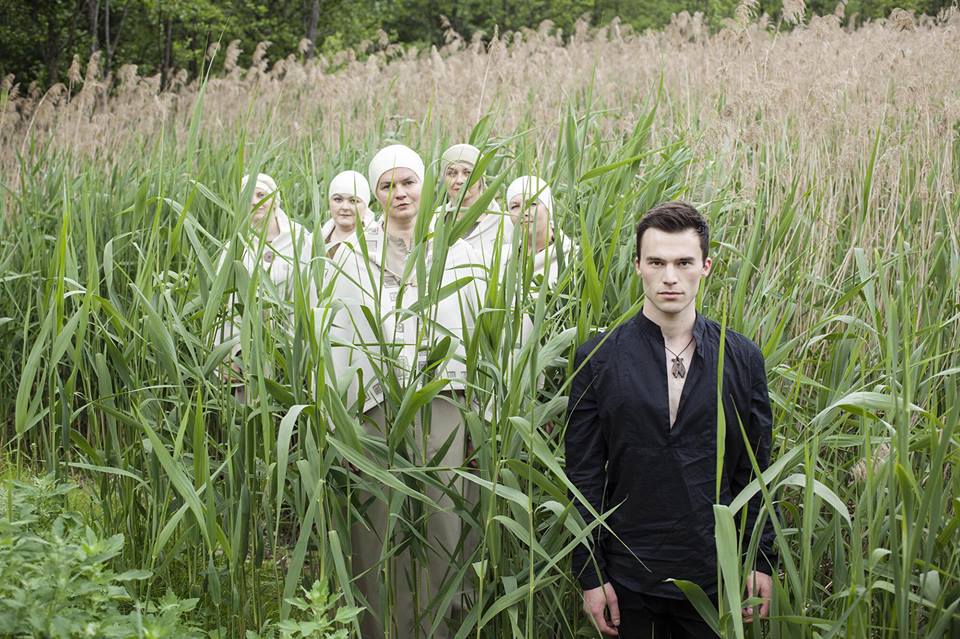
On Friday 24 July 3-5pm a classically trained violinist, Abraham Brody draws from music and pagan rituals of Baltic and Slavic cultures and will perform with Lithuanian folk singers Trys Keturiose. The performance will take place at the Barbican Art Gallery (Barbican Centre, Silk Street, City of London EC2Y 8DS). This performance is generously supported by the Lithuanian Culture Institute.
In our modern society, many of us have lost our roots. Knocked off balance by the speed and immediacy of modern technology, we have lost touch with many of the traditions which both ground us and orientate us to the rhythms of life. In this long-durational performance, Abraham Brody draws from both folk music and pagan rituals of Baltic Culture, exploring the connection to his roots through ritual, gesture, and music. In Ancestors Part II he will be joined by renowned Lithuanian folksinging ensemble Trys Keturiose who perform ancient polyphonic 'sutartinės'alongside Abraham Brody, bringing the performers and the public deeper into the rich Baltic tradition. (Youtube Trys Keturiose - Dūno, dūno upė).
For some of these rituals, the public will be invited to participate. The public is encouraged to remain in the space for as long as possible, so that they are able to fully experience the power of this transformation through ritual and music.
Abraham Brody is a London-based performance and conceptual artist as well as a classically trained violinist. His oeuvre introduces the violin into the genre of performance art and explores the participation of the audience in live performance. In ‘The Artist is Present’ for example – a 6 hour performance recently premiered at the Fondation Beyeler in Basel with Marina Abramovic – Brody invited members of the public to sit in front of him while he created musical improvisations in response to their eye contact.
The vocal group "Trys Keturiose" is led by Dr. Daiva Račiūnaitė-Vyčinienė, titled ‘the queen of sutartinės’, for 20 years already has been perfecting the performing of the old polyphonic songs sutartinės and reconstructing the melodies that are held in archives and published. The singers do not aim to copy the archival recordings, but seek to retain the authentic colour of the sutartinės sound. They also seek to approach contemporary arts and collaborate with composers and video artists. In the project Lino laikas (Flax Time), sutartinės are organically combined with video art. http://www.mxl.lt/trysketuriose


